Welcome
This portfolio brings together the work I've completed in DCDA 40833 and highlights how my skills developed throughout the semester. Each project reflects a different part of the course, from experimenting with AI tools to building a portfolio website and creating interactive visualizations.
Rather than just presenting finished assignments, this site shows the process behind them. Each lab includes a brief overview of the assignment, what I learned while completing it, and how it reflects the technical and creative skills I developed over the semester.
About Me
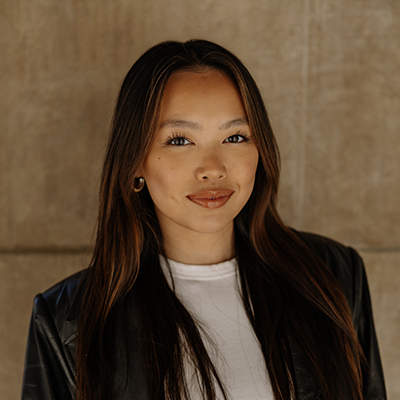
Who I am: Hi y'all! I'm Cecilia Murphy. I'm a senior Journalism major with a minor in Digital Culture and Data Analytics at TCU. I can't believe I'm graduating this May, but I'm excited for what's next and the opportunity to move to the city of my dreams. This portfolio highlights the work I completed throughout the semester in DCDA 40833 and reflects the skills I developed along the way.
My interests: My first love has always been dance, but I've always been drawn to the arts more broadly: fashion, museums, the stage, and film and television. I was especially interested in DCDA because of how many creative directions the program explores. I wanted to expand on skills I already had in visual and creative areas like art and photography while also developing new technical skills in areas like film, coding, and digital design.
What I hoped to learn: In this course, I wanted to deepen my knowledge of tools like VS Code (HTML, CSS, and JavaScript) while also learning new programs such as Python, ArcGIS, and Tableau. I had some previous exposure to Python, but this course gave me the opportunity to revisit it and build on that foundation while exploring new ways to work with data, visualization, and digital storytelling.
My Work
Click on any card below to view each full lab write-up:
AI Tool Evaluation
Lab 2For this lab, I took an experimentation-based approach to exploring generative AI tools. Instead of focusing on productivity or polished outputs, I intentionally pushed the tools (Leonardo.AI, Adobe Firefly, Runway, and Pika) in unconventional ways to see where they succeeded, failed, or revealed hidden assumptions. By testing different prompts and comparing results across tools, I documented what worked, what broke down, and what those outcomes revealed about how AI systems operate.
Tufte Critique
Lab 3For this lab, I analyzed the infographic “Global Suicide Rates Have Fallen by a Third” published by The Economist. Using Edward Tufte's principles of graphical excellence, I evaluated how the visualization presented its data and whether it communicated the information clearly and accurately. My critique focused on issues such as misleading averages, lack of contextual information, and the limited set of countries used to represent a supposedly “global” trend.
Tableau Visualization
Lab 4In this lab, I used Tableau Public to create interactive visualizations from a Kaggle dataset of global fashion brands, exploring relationships between brand equity, rankings, and long-term growth from 2001 to 2021.
Vibe Coding
Lab 5In this lab, I experimented with “vibe coding” by using AI tools to generate and debug website features like a dark mode toggle and responsive hamburger menu, while reflecting on how AI can support—but not replace—human understanding in coding.
Hometown Map
Lab 6In this lab, I created an interactive hometown map by designing a custom Mapbox basemap, building a CSV dataset of meaningful locations, and using Python to geocode addresses and generate an interactive map with pop-ups.
Semester Reflection
What I learned:
Over the course of the semester, I learned how different tools and technologies can work together to tell stories through data and design. I gained hands-on experience using programs like Tableau, Mapbox Studio, and Python, as well as strengthening my skills in HTML, CSS, and JavaScript through VS Code. Each lab pushed me to think about how design choices, data organization, and technical implementation all affect how information is communicated.
Challenges I overcame:
One of the biggest challenges was troubleshooting technical issues across different tools and coding environments. Whether it was debugging JavaScript for my website, cleaning and organizing datasets for Tableau, or resolving errors in my Python mapping script, I had to learn how to break problems down step by step. These challenges taught me that debugging is rarely about one single mistake, but about understanding how multiple parts of a project work together.
How I grew:
This course helped me grow both technically and creatively. At the beginning of the semester, I was less comfortable working with code and data tools. Through repeated experimentation and problem-solving, I became more confident navigating new technologies and thinking critically about how digital tools shape the way information is presented and understood.
Looking ahead:
Moving forward, I hope to continue applying these skills in projects that combine creativity, storytelling, and technology. Understanding how to work with data, build interactive visuals, and design digital experiences will be valuable in many fields, especially as digital media continues to evolve. This course gave me a strong foundation that I can build on in future creative and professional work.